Home
Documentation and support for the accsyn file I/O platform — deliveries, file sharing, Media Vault, BYOS, and developer automation — underpinned by the accelerated ASC protocol.
New here? Start with the Introduction or a free trial.
Status
- ONLINE
-
Ongoing incidents
-
-
Upcoming planned maintenance
-
-
Uptime
99.94% — 5 h outage in the recent year
-
Guaranteed uptime
99.3% — max 61 h outage per year
-
Recent outages
- 26.04.22 (10 min) — Auth0 DNS outage
- 26.01.28 (5 min) — Cloud accsyn server outage
- 25.08.13 (5 h) — Certificate upgrade issues
Identity provider status: Auth0 status page
Contact support
Guidelines
Please follow these guidelines so we can help quickly:
- We are a small company. Support is answered by developers who know the codebase — usually the fastest route to a real fix.
- Check this knowledge base first; many common questions are already covered below.
- Use a descriptive subject. Prefer Crash when writing file to disk over Need help.
- Attach screenshots and log files when you can (locations below).
- We answer emails in order received. If production is blocked, start the subject with URGENT so we can prioritise.
- We respond during office hours (below). Outside those hours responses are best-effort.
Office hours
Typical response within one (1) business day. Office hours:
08:00–18:00 CET (Swedish holidays)
Chat support
The fastest channel is the live chat in the bottom-right corner of the site.
Email support
Premium Support and Enterprise
Enterprise customers and Premium Support subscribers get prioritised email, a private chat channel, and telephone support. We use Slack by default and invite you during onboarding.
Note: If Slack is not an option, we can arrange another channel.
For urgent matters when chat or phone does not respond in time, also email support@accsyn.com with URGENT in the subject.
Log file locations
Server (daemon / service)
- Windows:
C:\ProgramData\accsyn\log - macOS:
/var/log/accsyn - Linux:
/var/log/accsyn
Desktop App
- Windows:
%APPDATA%\accsyn\log(typicallyAppData\Roaming\accsyn\log) - macOS:
~/Library/Logs/accsyn - Linux:
~/.accsyn/log
~ is your user home directory.
Terms
accsyn SaaS is provided on a best-effort basis. See Terms and conditions and Privacy policy.
Login and website
- Workspace and account: https://accsyn.io
- Product site: https://accsyn.com
Knowledge base
Guides for end users, operators, administrators, and developers.
For end users
-
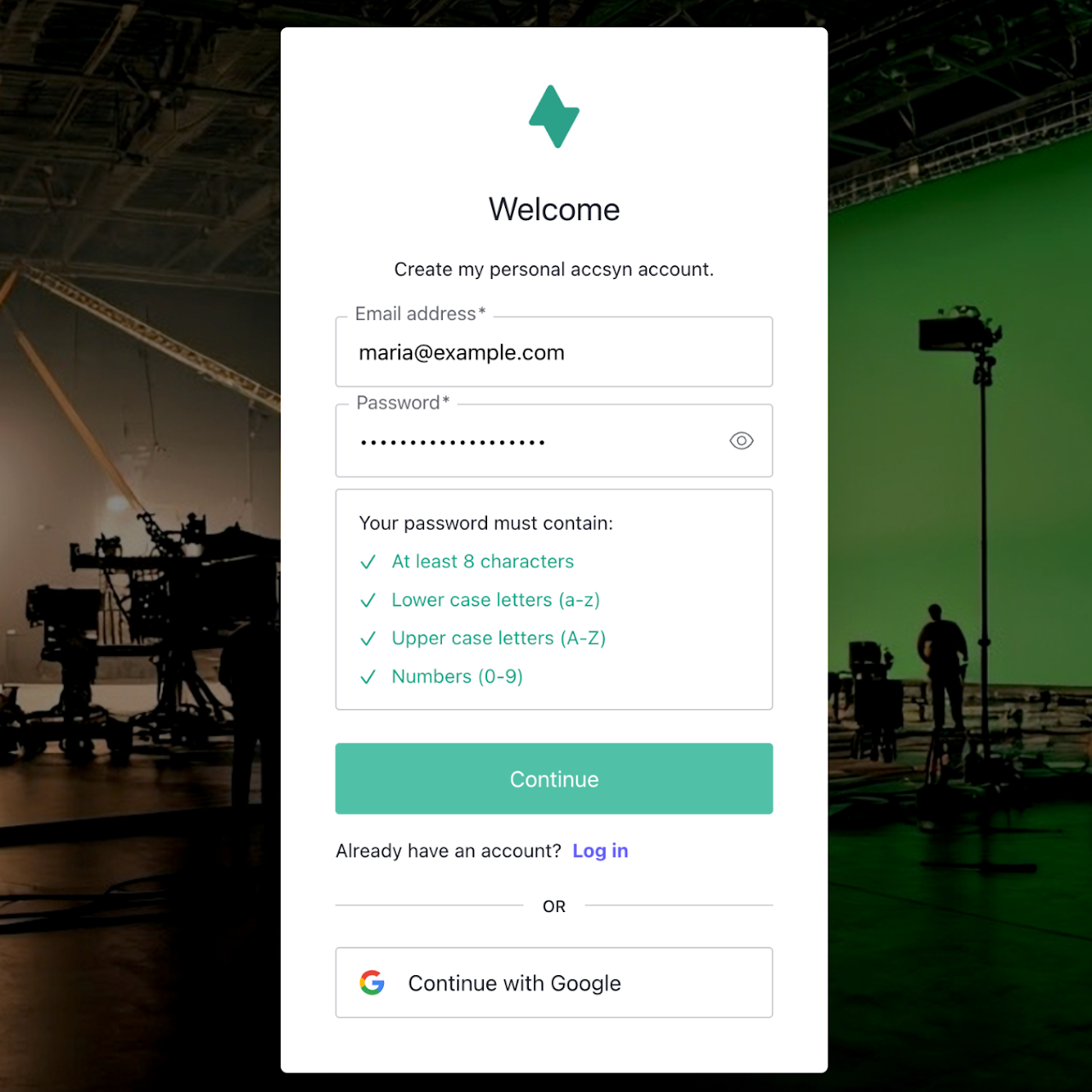
Sign up and manage your personal accsyn account.
-
Action an accsyn delivery or upload request.
-
Access shared folders with the Desktop App (ASC transfers).
-
Automated deliveries & local shares
User server, automated deliveries, and locally mapped shares.
Introduction and specifications
-

Platform overview for production (BYOS) and distribution (Cloud Vault).
-

ASC protocol, security architecture, and transfer lifecycle.
-

Technical feature and platform specifications.
-

What is new in recent releases.
Operating
Deliveries
Send large folders over a link, or request uploads - fast and secure.
-

High-speed file delivery subsystem.
-
Create a delivery or upload request (including API).
-

Monitor and manage deliveries and upload requests.
Collaboration
Share specific project subfolders on production storage with partners, powered by the ASC protocol.
-

File sharing as an FTP replacement on Cloud or BYOS.
-
Shares, ACLs, collections, homes, and API automation.
Media Vault
Tag and manage masters on accsyn Cloud — proxies, streaming, delivery, and lab workflows.
-
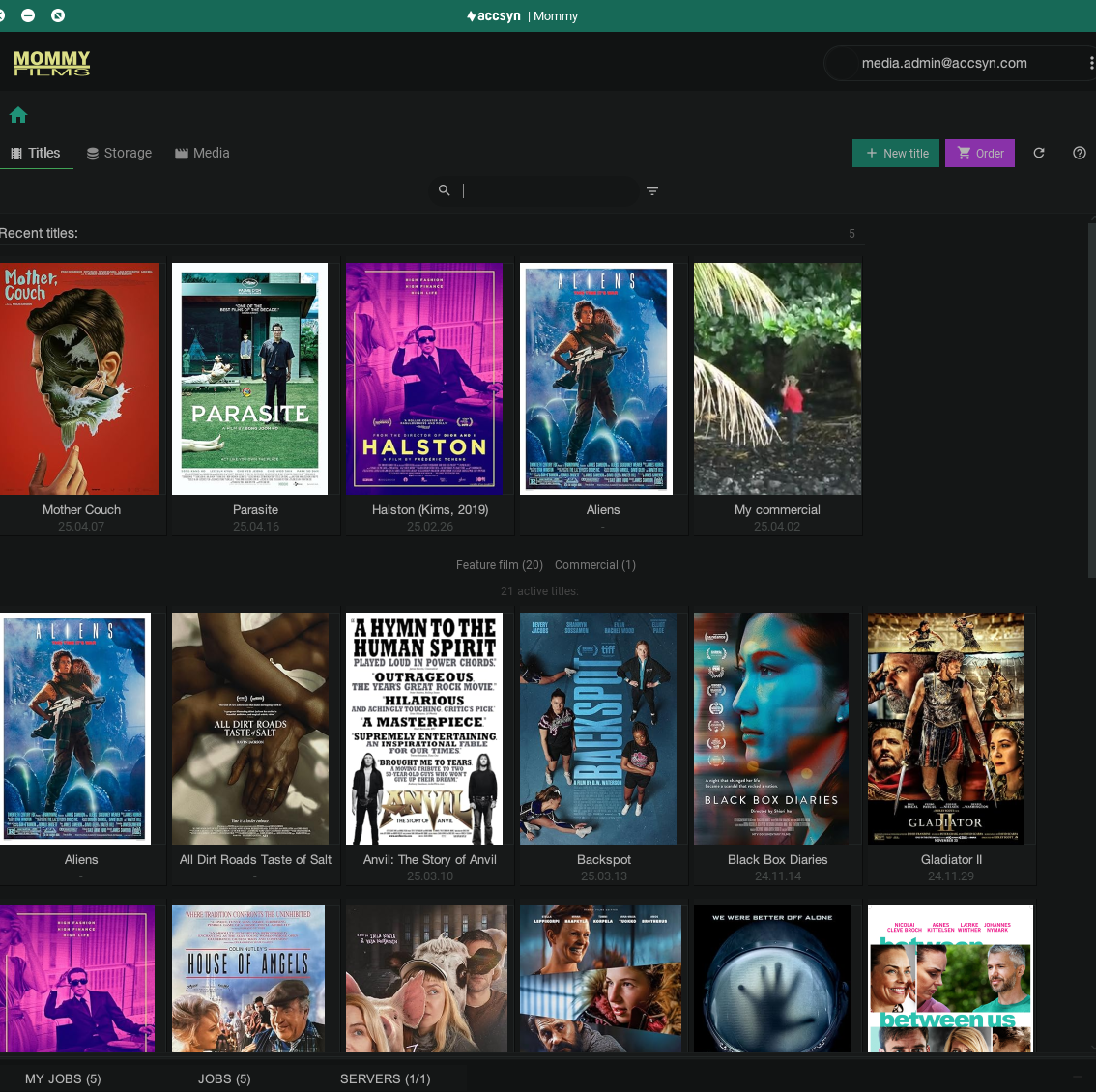
Media Vault overview (Cloud only).
-
Create your first title and folder layout.
-
Upload and tag media into the Vault.
-

Browse and manage titles and tagged media.
-
Deliver Vault media and request uploads to a title.
-

Proxies, VOD, and the Media Processor.
-

Browser streaming deliveries from a title.
-

Partner lab services for mastering, VOD, QC, and more.
General management
-

Inspect, prioritise, and manage transfer and compute jobs.
-

Push/pull between HQ, sites, and users with mapped shares.
-

Find and resolve runtime issues.
Administration
Trials and workspace admin
-

Manage workspace users and roles.
-

Configure workspace queues and priorities.
-

Audit registered file-transfer clients.
-
Configure volumes and shared folders.
-

Global workspace settings.
-

Try accsyn with your organisation.
BYOS — Bring Your Own Storage
Run servers on your office or cloud premises for production I/O.
-

Install and licence BYOS workspaces.
-

Install and manage storage and site servers.
-
Remote offices and cloud sites.
-
Engines for render/compute farms.
For developers
Automate transfers, hooks, publish workflows, and multi-site farms.
-

Automate file transfers and compute in your pipeline.
-
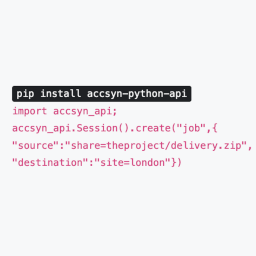
API keys, install, and getting started with Python.
-
Run scripts on transfer and job events.
-
Deploy compute across one or more sites.
-

Validate and ingest vendor submissions.
-
Job create payload syntax and examples.
Codes and settings
-
Warning codes shown in the product.
-
Error codes shown in the product.
-
Internal entity and workspace settings reference.
Tutorials
-
Replace FTP with ACL sharing and ASC performance.
-

Unattended vendor send and publish ingest.
-

Automate sync between offices and cloud with the Python API.
-

Festival file management with deliveries and Vault.
Terminology
- accsyn Cloud backend — Cloud software that schedules transfer jobs and hosts media. Each customer has an isolated backend instance and database.
- accsyn daemon — Background Java service on a file server or machine with disk access (also a “server” endpoint). Used for BYOS, sites, and User servers.
- accsyn Desktop App — Java desktop app (Windows, macOS, Linux) for users to upload and download (a “client” endpoint).
- ASC — Accelerated Secure Copy protocol — proprietary accelerated, encrypted file transfer protocol.
- ACL — Access Control List — which users may access which paths on a share.
- Cloud storage — Default volume on standard Cloud workspaces.
- Delivery — Package of files/folders for one or more recipients (ASC or HTTPS).
- Download / upload — Transfer from workspace server to client, or client to server.
- Dropoff — Upload without browsing a destination (default shared folder / date folder).
- Hook — Script or app run when a job reaches a given state.
- Host — Running app or daemon process on a computer (browser sessions excluded).
- HQ — Main site (default code
hq) where central storage is served. - Job — Transfer or compute package of one or more tasks; may carry JSON metadata.
- Media — File or folder on Cloud storage tagged in the Vault (proxies and metadata).
- Path — Absolute filesystem path, or accsyn path such as
volume=storage/…orshare=myshare/…. - Push / pull — HQ→site or site→HQ mirrored sync.
- Queue — Ordered job container with priority (default Medium @ 500; also Low @ 1, High @ 999).
- Roaming site — Built-in site for standard (and unassigned elevated) clients.
- Server — Client role that serves a volume; main server serves the default volume and may run hooks. Needs TCP ports (default 45190–45210) reachable as required.
- Shared folder — Subfolder of a volume shared via ACLs.
- Site — Remote office or cloud location; may have its own site server.
- Stream — Delivery variant with browser-playable media.
- Transfer — Job moving data between two endpoints (not always via HQ).
- Upload request — Reverse delivery asking users to upload to a temp or fixed path.
- User — Account identified by email; roles admin, employee, or standard.
- Volume — Root disk/share exposed to accsyn (code + OS paths); one default volume for temp uploads and homes.
- Workspace — Customer organisation / domain with an accsyn licence.